n8n Is an Open-Source Automation Tool in a No-Code World
In today’s marketing world, speed, personalization, and seamless data coordination are no longer optional. Automation has shifted from being a competitive edge to a fundamental requirement. Many companies still rely on tools like Zapier or Make.com to connect their software stack, but more teams are now turning to open-source alternatives that offer greater transparency, flexibility, […]
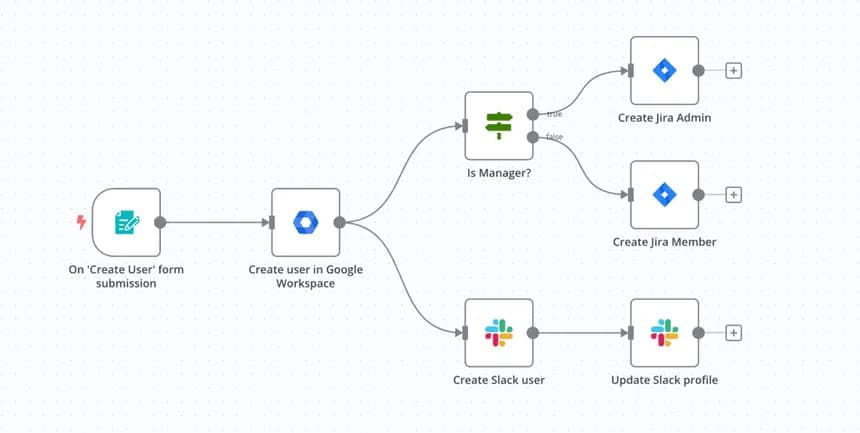
In today’s marketing world, speed, personalization, and seamless data coordination are no longer optional. Automation has shifted from being a competitive edge to a fundamental requirement. Many companies still rely on tools like Zapier or Make.com to connect their software stack, but more teams are now turning to open-source alternatives that offer greater transparency, flexibility, and control.

One such tool is n8n. It’s an open-source workflow automation platform that strikes a balance between no-code simplicity and developer-level customization. For marketing teams that want to streamline email campaigns, social media, lead capture, and reporting, n8n offers a visual approach that still allows for deep technical control when needed.
What Is n8n?
n8n stands for «nodemation» and is built around the concept of nodes—discrete steps that represent actions, triggers, or logic within a workflow. Users build workflows by visually connecting these nodes to define how data flows between apps and services. It comes with over 500 built-in integrations, including popular marketing tools like Mailchimp, HubSpot, Google Sheets, Twitter, and Salesforce.
Unlike most commercial platforms, n8n gives you the option to self-host. That’s a major advantage for organizations focused on data privacy, compliance, or the ability to tailor automation to their own infrastructure. You can run it on your local machine, on a private server, or in the cloud, and customize it extensively to suit your needs.
How Marketers Are Using n8n
Although it wasn’t built specifically for marketers, n8n’s flexibility makes it highly effective for marketing automation. Email workflows are one of the most common use cases. A marketer might create an automation that sends a welcome message when a new lead is added to a spreadsheet or CRM. The message could be personalized using database fields and delivered through Mailchimp or SendGrid. More advanced use cases might involve branching logic for A/B tests or tagging contacts based on behavior.
Lead management is another area where n8n excels. A marketer could connect a lead form built with Typeform or Webflow, enrich that lead using services like Clearbit or Hunter, send the contact to a CRM, and notify a sales rep via Slack or email all in a single automated process. What would typically require multiple tools or developer hours can now be managed with a reusable visual workflow.
Social media teams are also getting value from n8n. By linking a content calendar in Google Sheets with social media APIs like Twitter, LinkedIn, or Instagram, teams can automate post scheduling. Some go further by integrating AI services to generate captions or hashtags automatically, creating a smooth pipeline from planning to publishing.
When n8n Is the Right Fit
For marketers with technical skills or support from developers, n8n offers unmatched flexibility. Its open-source license means you’re not tied to specific pricing models or limited integrations. You can build your own custom nodes, connect to virtually any API, and modify workflows as your business evolves.
However, n8n is not the best fit for everyone. It does have a learning curve, especially for those unfamiliar with APIs or custom scripting. It also lacks built-in marketing features like analytics dashboards or drag-and-drop campaign builders. In that sense, it functions more as a back-end automation engine than a marketing suite.
Still, the appeal is strong. Many marketing ops teams, agencies, and startups prefer the ability to fully own their automation logic, choose where it’s hosted, and adapt it freely as they scale.
Automation Meets AI: What Comes Next
As automation becomes standard practice, the next leap is in content generation. Marketers are beginning to automate not just when and where content is delivered, but how it is created. Tools like GPT-4, Kling AI, and DALL·E are being used to generate everything from product descriptions to social media visuals.
This has opened the door to combining platforms like n8n with generative AI. A typical workflow might pull content topics from a spreadsheet, send them to an AI model to generate captions, request images from a visual API, and schedule posts across multiple platforms automatically. It’s a powerful mix of logic and creativity, all running without manual intervention.
If you’re interested in exploring this intersection of AI and automation, the course Social Media Content Creation with AI for Brands and Products by PromptHero offers a great starting point. While it doesn’t cover n8n specifically, it shows how to use AI to craft on-brand content and build repeatable systems for creative production. It’s a perfect complement for teams looking to scale their output with both structure and imagination.
