Optimus Shows Human-Like Movement in New Tesla Video
Each step and gesture from Optimus shows a level of coordination and natural motion rarely seen in robotics. The performance isn’t just for show it marks a new milestone in Tesla’s progress toward building a humanoid machine that can move like us. This latest video is part of Tesla’s ongoing effort to evolve Optimus from […]
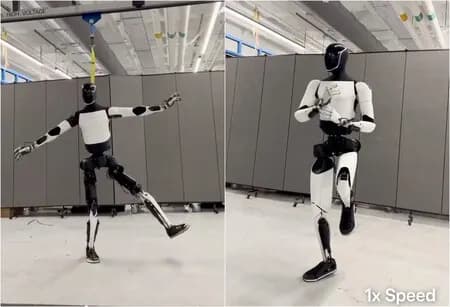
Each step and gesture from Optimus shows a level of coordination and natural motion rarely seen in robotics. The performance isn’t just for show it marks a new milestone in Tesla’s progress toward building a humanoid machine that can move like us.
This latest video is part of Tesla’s ongoing effort to evolve Optimus from a concept into a real-world assistant. Behind the scenes is a sophisticated training method: the robot’s movement is learned entirely through simulation using reinforcement learning, then transferred to the physical hardware. This approach, borrowed from Tesla’s autonomous driving systems, enables rapid iteration and real-world adaptability.
A Human-Like Gait, Finally Realized
It’s not the first time Optimus has shown progress. In a previous official video, Tesla showcased the robot walking independently through a test environment designed to challenge its balance an uneven floor covered in wood chips. Without cameras, using only internal sensors and a real-time control system, Optimus adjusts its gait and posture to stay upright. The way it swings its arms, steps heel-to-toe, and keeps a relaxed posture signals a breakthrough. It no longer walks like a machine—it’s learning to walk like us.
Precision in the Details
Tesla has also upgraded Optimus’s hands, now featuring 22 degrees of freedom. This allows for refined actions like grabbing objects, making expressive gestures, or performing everyday tasks. In one clip, Optimus pauses, crosses its arms, and holds a resting pose with an eerie calm that feels surprisingly human. Small moments like these move the robot from an engineering experiment to something closer to a working presence.
The recent dance clip only reinforces that impression. While entertaining, it highlights Tesla’s progress in combining balance, motion, and machine learning. Optimus can now execute full-body, real-time movements with agility—an essential step toward practical use in everyday settings.
Toward Real-World Use
Tesla has been clear that Optimus isn’t built just to perform on stage. Since its debut at AI Day 2021, Elon Musk has positioned the robot as a future worker—designed to replace humans in repetitive, boring, or dangerous jobs. That future is already beginning: Tesla is testing prototype units at its Fremont factory for light logistical tasks, such as moving parts or materials.

Of course, challenges remain. Decision-making, social interaction, and dealing with unpredictable environments are still major hurdles for humanoid robots. But if Tesla maintains this pace, it could become one of the first companies to bring such a robot from lab prototype to mainstream product.
Learn to Create with AI
If innovations like Optimus inspire you and you want to explore how AI can power your own creative work, check out Content Creation with AI for Brands and Products by PromptHero. This hands-on course is designed for marketers, creatives, and entrepreneurs who want to generate high-quality content—visual and written—using the latest AI tools.
