Vibe Coding is The Future of AI-Assisted Software Creation
You don’t need to memorize syntax or master every framework to build in today’s AI-driven world. What matters is knowing what you want and letting the AI handle the rest. That’s the essence of vibe coding, a term introduced by Andrej Karpathy, former Tesla AI lead and OpenAI co-founder. Vibe coding is more than just […]
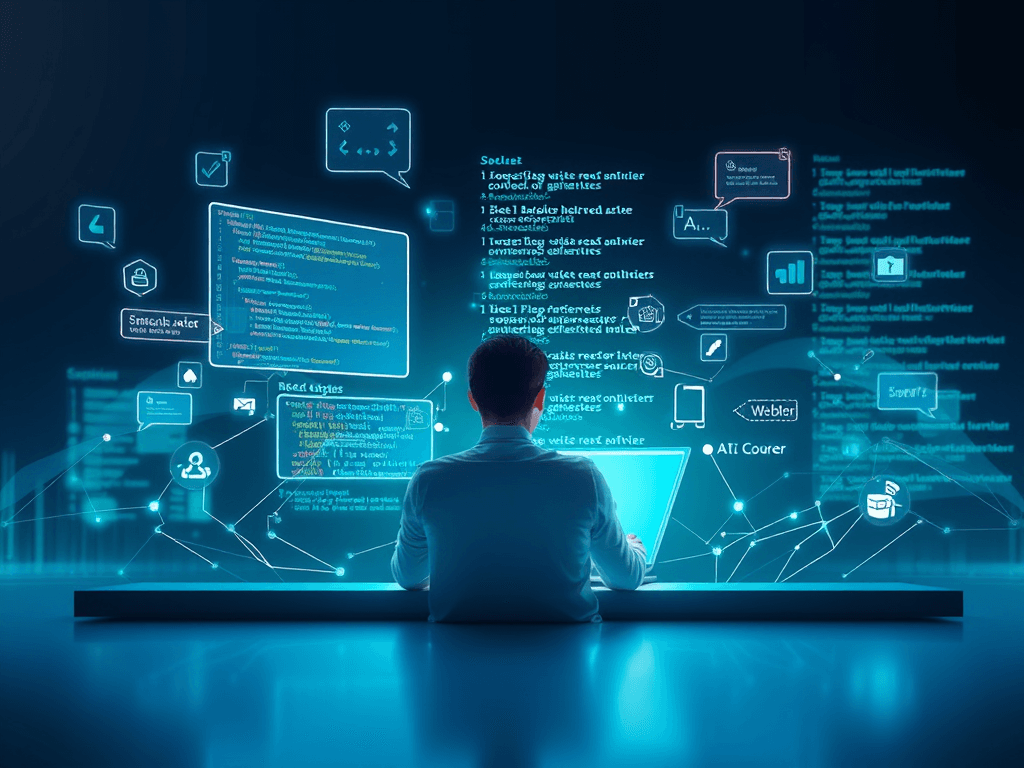
You don’t need to memorize syntax or master every framework to build in today’s AI-driven world. What matters is knowing what you want and letting the AI handle the rest. That’s the essence of vibe coding, a term introduced by Andrej Karpathy, former Tesla AI lead and OpenAI co-founder.

Vibe coding is more than just a catchy phrase. It’s a new way of thinking about how we interact with code. Instead of manually crafting every function or sweating over edge cases, you describe your goal in plain language and let generative AI tools bring it to life. Karpathy puts it best: “You just fully give in to the vibes, embrace the exponentials, and forget that code even exists.”
In this model, code becomes an outcome, not a task. You’re no longer writing line-by-line instructions. You’re shaping intent, guiding behavior, and iterating with the help of an AI that fills in the gaps.
How Vibe Coding Actually Works
At the heart of vibe coding is a prompt-based workflow. You start by describing what you want, something like “Make a simple site that lets users upload and preview images.” Then, an AI tool like ChatGPT, Replit, or Windsurf turns that into working code. You review the results, refine the prompt, and let the loop continue until it feels right.
This interaction turns coding into a kind of conversation. It’s not about control. It’s about collaboration, where your creativity drives the output and the AI accelerates the process.
The Tools Powering the Shift
A new wave of platforms is built around this idea. Cursor is an AI-native code editor that lets you generate features, ask technical questions, or debug using natural language. Replit supports everything from web apps to games with integrated AI that interprets your intent. Windsurf, formerly Codeium, brings co-creation to both developers and non-technical users, making coding feel like brainstorming with a smart partner.
What these tools have in common is that they remove the need to know every detail up front. You can focus on what you want to build, not how to build it.
Why It Matters
Vibe coding isn’t just a convenience. It’s a shift in who gets to build and how. Suddenly, people with no programming background can turn ideas into software. Developers can move faster, skipping boilerplate and going straight to testing ideas. And the space for experimentation grows because when AI handles the hard parts, you’re free to play.
But this shift doesn’t come without tradeoffs. Not all generated code is great. Some of it is clunky, insecure, or inefficient. You still need a human in the loop to review, debug, and think critically. Vibe coding lowers the barrier, but it doesn’t replace engineering judgment. Think of the AI as a co-pilot, not the pilot.
The Creative Parallel
If this idea of vibe-driven creation speaks to you, there’s a natural next step. The course AI-Powered Content Creation for Brands and Products by PromptHero brings that same mindset to branding and marketing. It teaches you how to shape messages, visuals, and videos using AI, translating brand ideas into engaging content without the usual production bottlenecks.
Just like vibe coding turns ideas into code, this course helps you turn concepts into content. Fast, flexible, and creatively empowering.
