A sample prompt of what you can find in this page
Prompt by digitalkin

community FLUX prompts

very few results

5 months ago

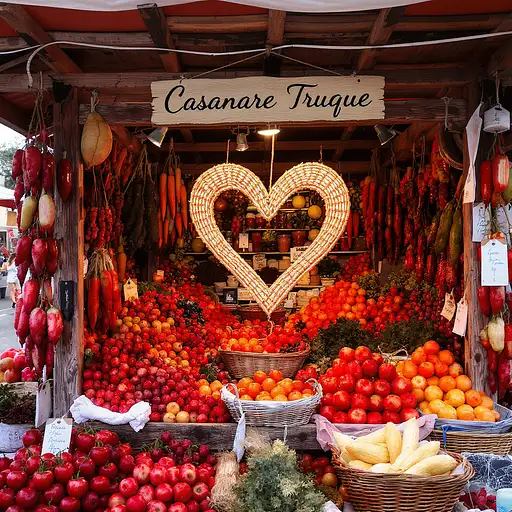
Watercolor-inspired digital painting Loose, impressionistic backgrounds. Contemporary digital illustration style: This represents modern digital art that's popular in concept art, character design, and online illustration communities - combining traditional artistic techniques with digital tools to create polished, commercially-viable artwork of a 24-year-old Kanak-Cherokee female chic minimalist with a warm and inviting expression. She has Pale skin with visible veins, giving a translucent appearance. The skin pores and texture are clearly visible and in focus. Her Cat eyes, Deep-set, grey eyes, framed by long, elegant eyelashes. Her haircut is Side-swept curls, haircolor is . Her eyebrows are Groomed arch shaped, complementing her delicate facial features. Her body is Firm, toned triceps with a sleek contour, small breast, toned abs, anorexic. Her upper body clothing is Cropped functional sleeve jacket, slightly open, Her midriff is clearly visible, Her lower body clothing is Low-rise gaucho pants with wide legs and maximum midriff exposure. She is positioned on the left side in the frame by the rule of thirds. She strikes a pose with hands in pockets, leaning slightly to one side, creating an easy-going, stylish look. . In the background A crowded flea market with eclectic stalls selling vintage clothes, antiques, and handmade crafts, offering a quirky, vibrant background full of textures and patterns.. The The lighting is diffused and warm, creating a dreamy, almost ethereal quality. The colors seem to glow and blend into each other, enhanced by the watercolor-like transparency effects. The overall effect is romantic, contemplative, and visually striking, with a professional quality typical of contemporary digital illustration work.

7 months ago

Grey alien, though small in stature, is anything but simple. It navigates the cosmos with grace, moving through the stars with an otherworldly elegance, a creature shaped by the infinite darkness that surrounds it. Let’s begin by describing the Grey alien’s daily existence, its interactions with the stars, and the somewhat intimate aspects of its biology. Life in Space The Grey alien is a solitary being, with no immediate sense of community. It floats alone through the expanse of space, a creature adapted to survive in the vacuum without any need for conventional sustenance or shelter. The void is both home and playground to it, and it is not bound by the limitations that govern organic life on planets. Its body is perfectly evolved for this environment. The alien breathes in the form of a faint, almost imperceptible exchange of gases that occurs at a molecular level, a form of respiration suited for the low-pressure environment of space. It has no need for food, relying instead on the energies of nearby cosmic phenomena: the radiation of distant stars, the magnetic fields of planets, and the energy flows of cosmic dust. It absorbs these into its body, where they sustain it without requiring ingestion in the traditional sense. Though its existence is quiet, there is a profound intelligence behind its stillness. This alien has a deep understanding of the universe’s rhythms, navigating by the pulses of starlight and the waves of gravity that ripple through the cosmos. It has witnessed the birth and death of stars, the collisions of comets and asteroids, and the slow, steady drift of forgotten worlds. Time, to the Grey alien, is less linear and more like a vast, ongoing cycle—endless, stretching from one horizon to the next.

7 months ago

Make a simple LOGO/Symbol that represents the following information.. History of the Hakka People - Key Points Here's a breakdown of Hakka history in point form, covering their origins, migrations, culture, and modern situation: **I. Origins & Early History (Pre-Song Dynasty - Before 960 AD)** * **Han Chinese Roots:** The Hakka are a subgroup of the Han Chinese, *not* a separate ethnic group. Their name “Hakka” (客家) literally means “guest families.” * **Northern Origins:** Most scholars believe the Hakka originated from areas of North and Central China (Henan, Shanxi, Shaanxi) during periods of upheaval. * **Multiple Migrations:** They weren’t a single migration, but *waves* of migration southward over centuries, starting as early as the Qin and Han dynasties (221 BC – 220 AD). * **Avoiding Conflict:** These migrations were often driven by political instability, war, and famine. The Hakka tended to move *away* from conflict, not to conquer. * **Early Settlers in Jiangxi:** The Jiangxi province became an early and important staging ground for their southern migrations. **II. The Long Migration & Settlement (Song - Ming Dynasties - 960 - 1644 AD)** * **Southern Migration Intensifies:** The Song Dynasty (960-1279) saw a significant acceleration of Hakka migration southwards. * **Conflict with Existing Populations:** As they moved south, the Hakka often settled in marginal lands or areas already inhabited by other groups (including other Han Chinese, and minority groups like the She and Yao). This led to frequent conflicts and clashes. * **“Guest” Status:** They were often seen as outsiders or "guests" by the existing populations, hence the name “Hakka.” They were often denied full integration. * **Settlement in Guangdong, Fujian, Jiangxi:** The Hakka eventually settled primarily in the provinces of Guangdong, Fujian, and Jiangxi, as well as parts of Sichuan, Hunan, and Guangxi. * **Fortified Villages (Weitou):** Due to constant threats and conflict, the Hakka developed a unique architectural style – fortified, circular villages known as *Weitou* (围头). These served as both homes and defensive structures. * **Development of Distinct Culture:** During this period of migration and isolation, the Hakka developed their own distinct language, customs, and traditions. **III. Qing Dynasty & Modern Era (1644 - Present)** * **Qing Dynasty Stability:** The Qing Dynasty (1644-1912) brought a period of relative stability, allowing the Hakka to consolidate their settlements and develop their economy. * **Continued Marginalization:** However, they remained largely marginalized from mainstream Chinese society, often facing discrimination and economic hardship. * **Taiping Rebellion (1850-1864):** A significant number of Hakka joined the Taiping Rebellion, a large-scale uprising against the Qing Dynasty. This further complicated their relationship with the central government. * **Overseas Migration:** In the late 19th and early 20th centuries, many Hakka emigrated overseas, primarily to Southeast Asia (Malaysia, Indonesia, Thailand, Singapore) and other parts of the world. They became successful merchants and entrepreneurs. * **Communist Revolution (1949):** After the Communist Revolution in 1949, the Hakka were initially seen as a potentially rebellious group due to their history of independence and resistance. * **Recognized as a Minority Group:** In the 1990s, the Chinese government officially recognized the Hakka as one of China’s 56 ethnic groups, though they are still considered a subgroup of the Han Chinese. * **Cultural Revival & Tourism:** In recent decades, there has been a growing interest in Hakka culture and heritage, with efforts to preserve their traditions, language, and architecture. Hakka villages are becoming popular tourist destinations. * **Diaspora Connections:** The Hakka diaspora remains strong, with significant communities around the world maintaining connections to their ancestral homeland. **Key Characteristics of Hakka Culture:** * **Language:** Hakka language (Hakka Hua), a Sinitic language distinct from Mandarin and Cantonese. * **Architecture:** Circular fortified villages (Weitou). * **Cuisine:** Unique Hakka cuisine, known for preserved foods, stuffed tofu, and savory flavors. * **Ancestor Veneration:** Strong emphasis on ancestor worship. * **Matrilineal Traditions (in some areas):** Some Hakka communities retain elements of matrilineal inheritance and family structures. * **Emphasis on Education:** Historically, the Hakka placed a high value on education. This list provides a concise overview of Hakka history and culture. It’s a complex and fascinating story of migration, adaptation, and resilience.

6 months ago

Here is the English version of your detailed scene prompt: --- Create an image of the man confidently yet casually posing next to a customized Indonesian car. The car is a Nissan Grand Livina, modified with a sporty body kit, lowered suspension, oversized racing wheels, bright blue LED headlights, and distinctive decals representing a local car modification community. The car has a striking metallic red color with matte black accents and glowing blue underglow lights, and features a license plate reading "A 212". The man is dressed in a streetwear outfit suitable for the night-time automotive scene: a black bomber jacket with reflective details, a plain white t-shirt underneath with "mas-j" written on the right chest, olive cargo shorts, and black-and-white Vans sneakers with a minimalist design. He’s also wearing a sporty digital watch and a simple leather bracelet. His pose is relaxed and confident — one hand in his pocket, the other resting on the car’s hood. His head is slightly tilted as he looks at the camera with a subtle smile. His body leans slightly toward the car, showing his connection and pride in the modified vehicle. The background is a Pertamina gas station at night, glowing under characteristic neon lighting: red and white-painted fuel pillars with a brightly lit Pertamina logo, a canopy with bright white LED lighting, and a shiny wet concrete floor that reflects the lights as if it had just rained. Modern red fuel dispensers with digital screens are visible, along with LED-lit fuel price signage. In the distance, a small minimarket building and a few parked vehicles can be seen. Streetlights and reflections from the car and jacket enhance the vibrant and cool night-time atmosphere.