A sample prompt of what you can find in this page
Prompt by Pulsar212121

dissolving into light FLUX flux-1.1-pro prompts

very few results

7 months ago

Inside a vast, empty gallery with smooth black walls and polished floors, a single white canvas hangs isolated on a jet-black wall. From afar, it appears blank—but up close, an impossibly intricate hand-drawn maze in faint charcoal lines covers its surface, barely visible. A lone figure, dressed in black, stands before the canvas. Their elongated shadow merges seamlessly into the floor, dissolving into the void. Above, a narrow skylight slices the space with a focused beam of pure white light, dividing the gallery into two stark halves—light and darkness. Dust floats gently in the air, catching the light like falling snowflakes. The only visible objects—crumpled paper near the figure’s feet, subtle breath vapor—exist solely in black and white, with no color, only contrast. There are no grays, only presence or absence. Everything in this world is shaped by what is not there: silence between thoughts, space between shapes, light’s gravity on emptiness. Meaning is found in the void between visible and invisible. Style: minimalist surrealism, conceptual abstraction Palette: pure black & white, soft shading gradients only from lightfall Lighting: high-contrast key light from skylight, deep ambient void Mood: meditative, existential, soft melancholy Composition: rule of thirds, empty center frame, high symmetry with void offset Visual Elements: lone canvas with hidden charcoal maze, black-clad figure, merging shadow, floating dust, quiet gallery architecture Themes: memory, perception, void, silence, duality of presence/absence Rendering style: ultra-high-resolution ink-detailed rendering, soft monochrome cinematic photography, Unreal Engine grayscale setup, volumetric dust with ray-traced lighting


8 months ago

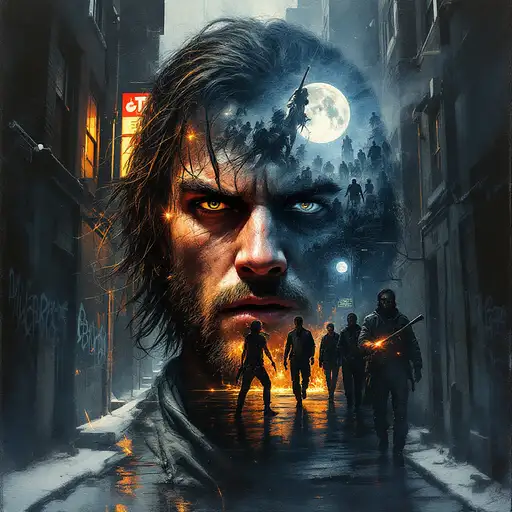
Craft a dynamic and emotionally charged oil painting that uses the double exposure technique to capture the raw energy, unity, and struggles of The Warriors. The central figure should be one of the Warriors, such as Swan, his face half-translucent and fierce, embodying both the individual and collective spirit of the gang. His expression should be filled with determination and defiance, while his figure dissolves into the gritty, chaotic streets of 1970s New York City—dark alleys, graffiti-tagged walls, and the stark silhouettes of neon lights. His features should bleed into the urban landscape, as though he is both a part of the city and a symbol of rebellion against it. Inside his form, a web of interconnected images from the Warriors' journey should emerge: the haunting image of the baseball bat-wielding Rogues, the fire-lit glow of the moonlit escape across subway tunnels, and the strong camaraderie of the Warriors themselves, seen through their shared struggles and brotherhood. The double exposure should seamlessly integrate these elements into his figure, illustrating the tension between individual survival and the unbreakable bond of the gang as they face overwhelming odds together. The color palette should reflect the gritty urban feel of the film, with cool blues, grays, and blacks contrasted with the neon oranges, reds, and greens of the streetlights and graffiti. The atmosphere should feel electric, filled with an undercurrent of danger, defiance, and unspoken loyalty. The oil painting should evoke a sense of movement—like a snapshot of the Warriors running through the night, the harsh cityscape blurring into their form, and the struggle against the forces that threaten to tear them apart. This double exposure composition should not only explore the Warriors' journey through the hostile streets but also the emotional and psychological depth of their fight for survival and unity. The contrast between the rawness of their environment and the bond they share should be at the heart of this painting, encapsulating the spirit of The Warriors as a timeless symbol of resilience and brotherhood.

8 months ago

"An award-winning, harrowing double exposure oil painting that captures the sinister and macabre atmosphere of Hostel. The central figure is a young traveler, their face a haunting mix of fear, disbelief, and desperation as they slowly realize the horrors unfolding around them. Their image blends with the disturbing, nightmarish surroundings of the foreign hostel—dimly lit hallways, locked doors, and the shadowy, unfeeling faces of their captors lurking in the background. The double exposure technique seamlessly merges the figure with the grotesque and macabre imagery of the torture chambers, with ominous tools of pain, bloodstained floors, and dark silhouettes of twisted figures in the background, all becoming part of the character’s form. The tension is palpable as the traveler’s body dissolves into the cruel, unrelenting environment, their limbs intertwining with the dilapidated walls, chains, and eerie shadows. The palette is dominated by dark, foreboding tones—grays, blacks, and muted reds—accentuated by the occasional, sickly yellow light from the flickering lamps, heightening the sense of dread and isolation. The texture of the oil paint intensifies the claustrophobic atmosphere, with thick brushstrokes creating depth and tension, as every element of the painting seems to close in on the viewer. The composition blends the vulnerability of the protagonist with the inescapable terror of the environment, conveying the chilling theme of being trapped in a foreign, cruel world where one’s worst fears come to life. This masterpiece is a visceral exploration of human terror, survival, and the grotesque, making it a darkly captivating and emotionally charged portrayal of the horrors from Hostel.

7 months ago

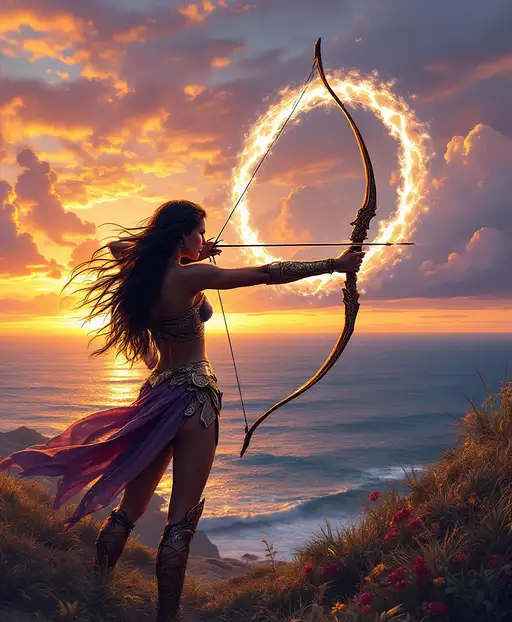
In a deeply idyllic scene, a stunning Amazon of supernatural beauty stands on a hill overlooking a vast ocean. The sky, in the throes of a vibrant sunset, is painted in warm tones of orange, purple, pink, and gold, reflected in the gentle waves of the sea. The golden light of dusk bathes theAmazon, whose strong and slender figure is adorned with intricately detailed ancestral armor, shining under the last rays of the sun. In her hands, she holds a finely carved sacred wooden bow, poised in a shooting stance. With a firm and balanced posture, the Amazon pulls the bowstring tight, her arms tense, and her body perfectly aligned as her determined gaze locks onto a mystical target formed by clouds floating high in the sky. The target, a perfect circle of clouds glowing with the light of the sunset, seems to come alive on the horizon. Her finger hovers, ready to release the string, capturing all the energy of the moment. Her dark hair flows freely in the wind, reflecting the dynamic energy of the scene. At her feet, the ocean reflects the vibrant expressionist colors of the sky, with fiery reds, oranges, and purples dissolving into the horizon. The soft waves lap gently at the shore, while the entire atmosphere is charged with a mystical, cosmic energy that connects sky, sea, and earth. Every detail in the scene—from the Amazon’s tensely poised stance to the glowing cloud target in the sky—evokes a moment of strength and spiritual connection. The universe seems to hold its breath as the Amazon, fully focused and in tune with the forces of nature, prepares to release the arrow, uniting the earthly and the divine in a single gesture."

8 months ago

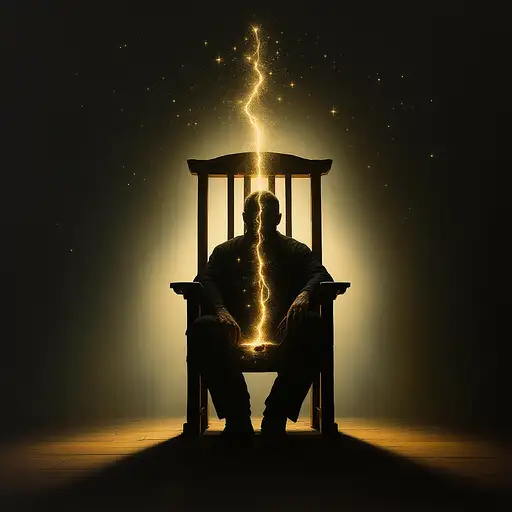
An award-winning double exposure oil painting masterpiece inspired by The Green Mile, with a powerful emotional and symbolic focus on the electric chair—not as an object of violence, but as a stark contrast between man’s justice and divine mercy. The central figure is John Coffey, depicted in quiet stillness, seated and calm, his expression one of sorrow and acceptance. His silhouette contains the double exposure—his form blending into the shadowy interior of the execution chamber, where the electric chair sits bathed in soft, ominous light. Inside his body, the double exposure reveals a layered, poetic world: the electric chair looms at the heart, but it is surrounded by moments of grace—Paul Edgecomb’s hand on Coffey’s shoulder, the miraculous healing of the warden’s wife, and streams of glowing, golden light flowing upward from Coffey’s chest, dissolving into a night sky dotted with stars or angelic shapes. The mouse, Mr. Jingles, runs along the floorboards beneath the chair, a symbol of innocence enduring. The chair itself is rendered not with gore, but with reverent detail—an icon of sorrow, misunderstood judgment, and broken humanity. The color palette contrasts dark mahogany and deep prison greys with bursts of radiant gold, spiritual white, and hints of green—symbolizing both the literal “Green Mile” and hope. The brushwork is intimate and layered: the texture of sweat, woodgrain, tears, and light captured in strokes that feel as heavy as memory. Themes of redemption, spiritual suffering, mortality, and misunderstood power rise from the composition. This painting becomes not a depiction of death, but of the sacred tension between cruelty and compassion—where the electric chair becomes a tragic altar, and Coffey, a modern martyr.