A sample prompt of what you can find in this page
Prompt by The_Promptonaut

as if time is running out prompts

very few results

9 months ago

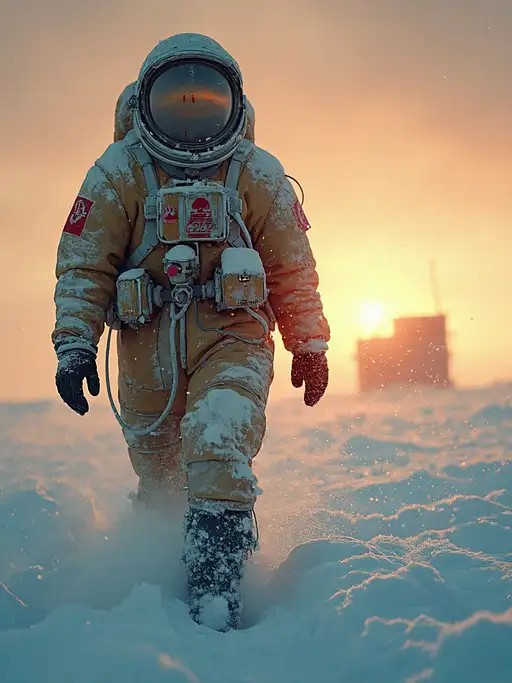
(A hyper-realistic, cinematic photograph in the style of 1970s Soviet sci-fi:1.3), depicting a lone Soviet Arctic explorer struggling through an intense blizzard (flying snow particles:1.7) as the setting sun (setting sun through blizzard:1.5) tries to pierce through the swirling storm. The explorer is clad in a bulky, worn, and weathered retro-futuristic spacesuit, with faded red and white accents and a prominently displayed CCCP insignia across the chest (CCCP insignia:1.5). His suit is covered in frost and ice, battered by the harsh Arctic conditions, with snow clinging to the edges and joints. The blizzard is fierce, with snow and ice particles violently flying through the air (flying snow particles:1.7), obscuring the landscape and making the explorer’s journey even more treacherous. The air is thick with whipping snow, which interacts with the faint light from the setting sun (sunlight piercing through storm:1.5), casting dim, golden beams that struggle to penetrate the storm. The light creates fleeting, volumetric shafts through the blizzard, catching on the swirling snowflakes and illuminating the scene in brief, ghostly flashes. Despite the fading light and harsh conditions, the explorer presses on toward a barely visible nuclear generator (nuclear generator:1.4), half-buried under the snow. His steps are slow and heavy, with snow building up around his legs as he fights against the wind. The worn spacesuit shows signs of prolonged use, with cracks in the visor fogging over, and his breath visible inside the helmet. Snow particles whip violently around him, catching the last of the day’s light, while patches of golden sunlight filter through the blizzard, giving a surreal and fleeting glow to the harsh, frozen landscape. The setting sun casts long, dramatic shadows across the snow-covered ground, but the intensity of the storm continually threatens to snuff out the light, making the environment feel overwhelming and unforgiving. The blizzard is relentless, with snow and ice clinging to the explorer’s spacesuit, and the setting sun adds a feeling of urgency, as if time is running out. The last beams of sunlight interact with the flying snow particles, creating a flickering effect, with the light constantly shifting and fading as the explorer marches forward.

9 months ago

(A hyper-realistic, cinematic photograph in the style of 1970s Soviet sci-fi:1.3), depicting a lone Soviet Arctic explorer struggling through an intense blizzard (flying snow particles:1.7) as the setting sun (setting sun through blizzard:1.5) tries to pierce through the swirling storm. The explorer is clad in a bulky, worn, and weathered retro-futuristic spacesuit, with faded red and white accents and a prominently displayed CCCP insignia across the chest (CCCP insignia:1.5). His suit is covered in frost and ice, battered by the harsh Arctic conditions, with snow clinging to the edges and joints. The blizzard is fierce, with snow and ice particles violently flying through the air (flying snow particles:1.7), obscuring the landscape and making the explorer’s journey even more treacherous. The air is thick with whipping snow, which interacts with the faint light from the setting sun (sunlight piercing through storm:1.5), casting dim, golden beams that struggle to penetrate the storm. The light creates fleeting, volumetric shafts through the blizzard, catching on the swirling snowflakes and illuminating the scene in brief, ghostly flashes. Despite the fading light and harsh conditions, the explorer presses on toward a barely visible nuclear generator (nuclear generator:1.4), half-buried under the snow. His steps are slow and heavy, with snow building up around his legs as he fights against the wind. The worn spacesuit shows signs of prolonged use, with cracks in the visor fogging over, and his breath visible inside the helmet. Snow particles whip violently around him, catching the last of the day’s light, while patches of golden sunlight filter through the blizzard, giving a surreal and fleeting glow to the harsh, frozen landscape. The setting sun casts long, dramatic shadows across the snow-covered ground, but the intensity of the storm continually threatens to snuff out the light, making the environment feel overwhelming and unforgiving. The blizzard is relentless, with snow and ice clinging to the explorer’s spacesuit, and the setting sun adds a feeling of urgency, as if time is running out. The last beams of sunlight interact with the flying snow particles, creating a flickering effect, with the light constantly shifting and fading as the explorer marches forward.

5 months ago

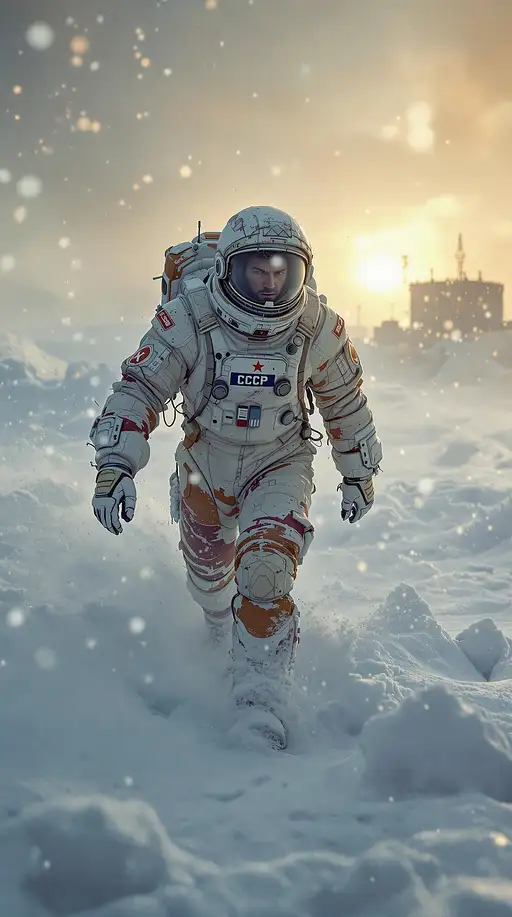
(A hyper-realistic, cinematic photograph in the style of 1970s Soviet sci-fi:1.3), depicting a lone Soviet Arctic explorer struggling through an intense blizzard (flying snow particles:1.7) as the setting sun (setting sun through blizzard:1.5) tries to pierce through the swirling storm. The explorer is clad in a bulky, worn, and weathered retro-futuristic spacesuit, with faded red and white accents and a prominently displayed CCCP insignia across the chest (CCCP insignia:1.5). His suit is covered in frost and ice, battered by the harsh Arctic conditions, with snow clinging to the edges and joints. The blizzard is fierce, with snow and ice particles violently flying through the air (flying snow particles:1.7), obscuring the landscape and making the explorer’s journey even more treacherous. The air is thick with whipping snow, which interacts with the faint light from the setting sun (sunlight piercing through storm:1.5), casting dim, golden beams that struggle to penetrate the storm. The light creates fleeting, volumetric shafts through the blizzard, catching on the swirling snowflakes and illuminating the scene in brief, ghostly flashes. Despite the fading light and harsh conditions, the explorer presses on toward a barely visible nuclear generator (nuclear generator:1.4), half-buried under the snow. His steps are slow and heavy, with snow building up around his legs as he fights against the wind. The worn spacesuit shows signs of prolonged use, with cracks in the visor fogging over, and his breath visible inside the helmet. Snow particles whip violently around him, catching the last of the day’s light, while patches of golden sunlight filter through the blizzard, giving a surreal and fleeting glow to the harsh, frozen landscape. The setting sun casts long, dramatic shadows across the snow-covered ground, but the intensity of the storm continually threatens to snuff out the light, making the environment feel overwhelming and unforgiving. The blizzard is relentless, with snow and ice clinging to the explorer’s spacesuit, and the setting sun adds a feeling of urgency, as if time is running out. The last beams of sunlight interact with the flying snow particles, creating a flickering effect, with the light constantly shifting and fading as the explorer marches forward. The mood is one of isolation and survival, heightened by the combination of the setting sun’s faint warmth and the cold, brutal storm. The explorer’s worn gear and the harsh, shifting light emphasize the clash between nature’s fury and human endurance, while the retro-futuristic design of the spacesuit and equipment ties the scene back to a 1970s Soviet sci-fi aesthetic
8 months ago

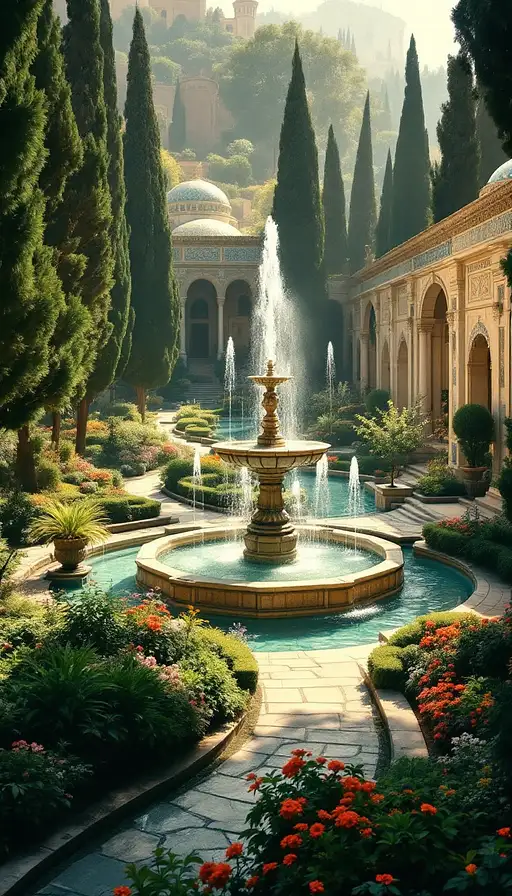
A beautiful and historical Persian garden in the 1950s to 1970s, reflecting the elegance of the Pahlavi era, with lush greenery, vibrant flowers, and carefully designed water features. The garden is located in Karaj, Iran, featuring intricate Persian tile work, classical columns, and domed architectural structures. The sunlight casts a warm glow over the stone pathways, which are surrounded by meticulously landscaped areas of tall trees, shrubs, and ornamental flowers. The air is filled with the peaceful sounds of flowing water from fountains and pools, adding to the serene atmosphere." Detailed Description: Architecture and Design: The garden features traditional Persian elements such as tall, slender columns and domed structures. The buildings surrounding the garden show clear influence from both classical Iranian and European architectural styles common in the Pahlavi era, with detailed tile work in shades of blue and turquoise. The roof of the buildings is adorned with intricate mosaics. Water Features: One of the most prominent features of the garden is its central fountain and multiple water channels running throughout, typical of Persian gardens. The central fountain is a large, circular, marble basin with a finely detailed water spout, spraying water high into the air. Surrounding this fountain are smaller water channels running along the pathways, flanked by flower beds and shrubs. Flower Beds and Greenery: The garden is meticulously landscaped with symmetrical flower beds that include a variety of vibrant, colorful flowers such as roses, tulips, and jasmine. Lush green lawns stretch between rows of neatly trimmed hedges, providing both aesthetic beauty and an atmosphere of peace and calm. Pathways and Lighting: Stone pathways lead visitors through the garden, bordered by rows of tall, elegant trees such as cypress and pine. The soft, golden light of the 1950s/1970s-era outdoor lighting, with lamps shaped like vintage streetlights, casts a soft glow on the garden after sunset. Atmosphere of the Pahlavi Era: The overall atmosphere captures the optimistic, modernist spirit of the Pahlavi era, with the design choices of the time reflecting both traditional Persian culture and the modernization happening across Iran. The colors are vibrant, with the golden hour light contributing to the nostalgic and rich look of the scene. The social and historical context of the Pahlavi era is evident in the overall style and aesthetic of the garden, which combines both classical Persian and early modernist influences. Color and Style: The images should be in full color, with a warm and rich color palette reflective of the mid-20th century, focusing on the bright, lively colors typical of Persian gardens—greens of the trees and plants, blues and turquoises of the tiles, and the soft, golden lighting of the era.